
Automation Is No Longer Optional In Pharmacovigilance
The pharmacovigilance landscape is entering a new phase of transformation. As adverse event volumes continue to rise and regulatory expectations become increasingly complex, life sciences organisations are looking beyond traditional safety databases to create more efficient, scalable operating models.
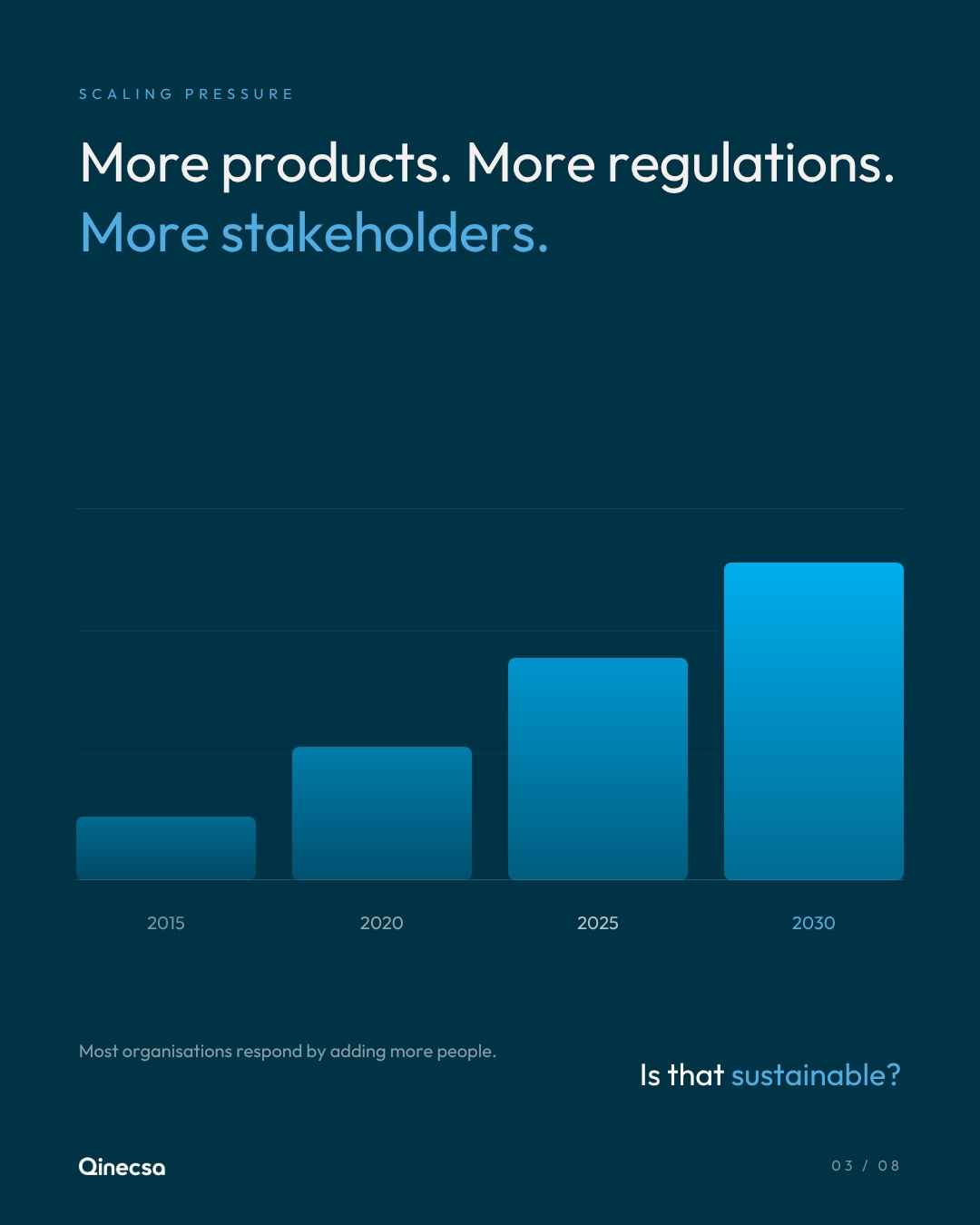
Recent market analysis predicts significant growth in the pharmacovigilance automation market over the next decade, driven by increasing regulatory requirements, expanding clinical pipelines, growing adoption of AI and automation technologies, and the need to improve operational efficiency while maintaining compliance.
The message is clear: organisations that continue to rely on manual, disconnected workflows will find it increasingly difficult to scale.
The Challenge Isn’t Your Safety Database
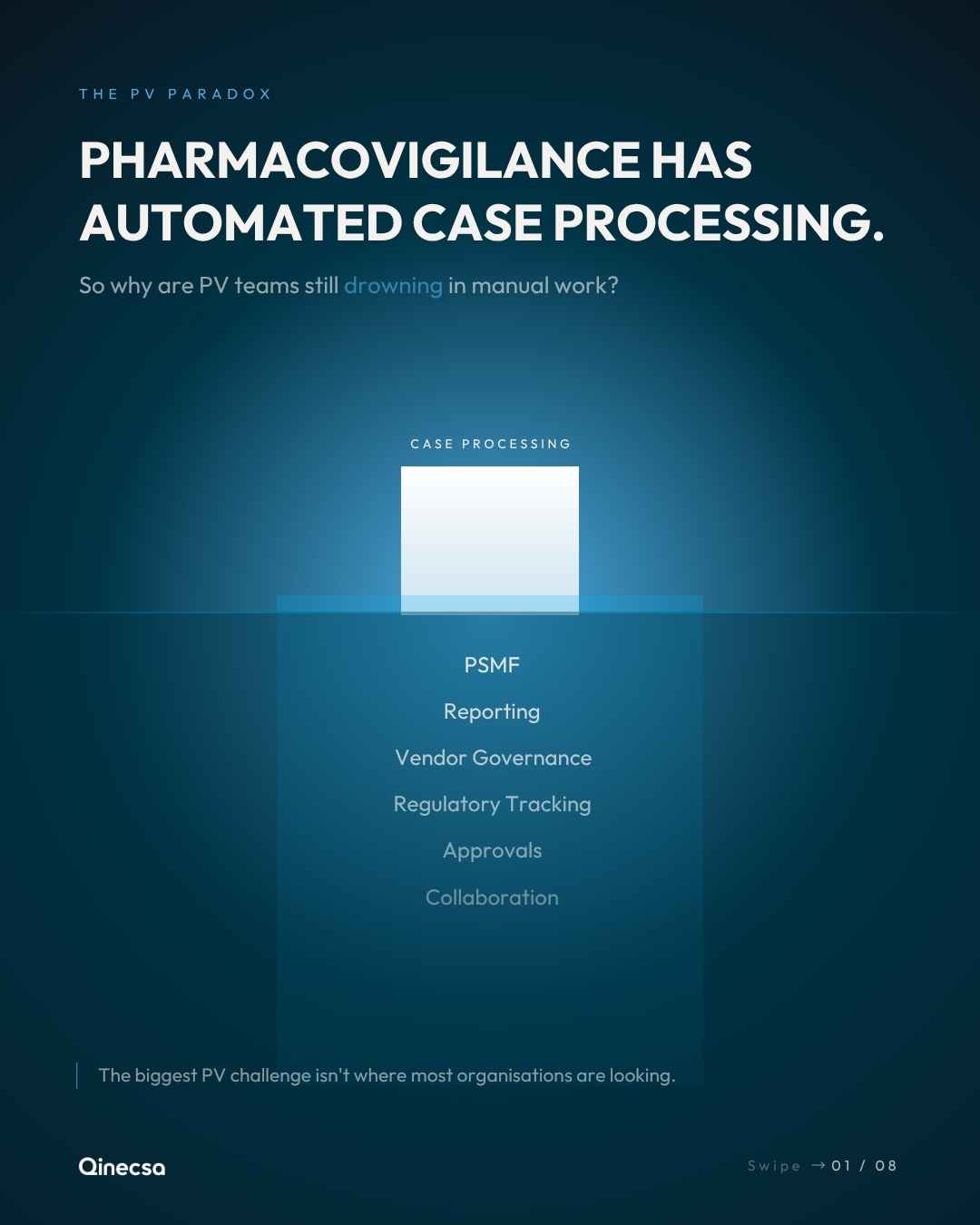
Most pharmacovigilance organisations have already invested heavily in their global safety database.
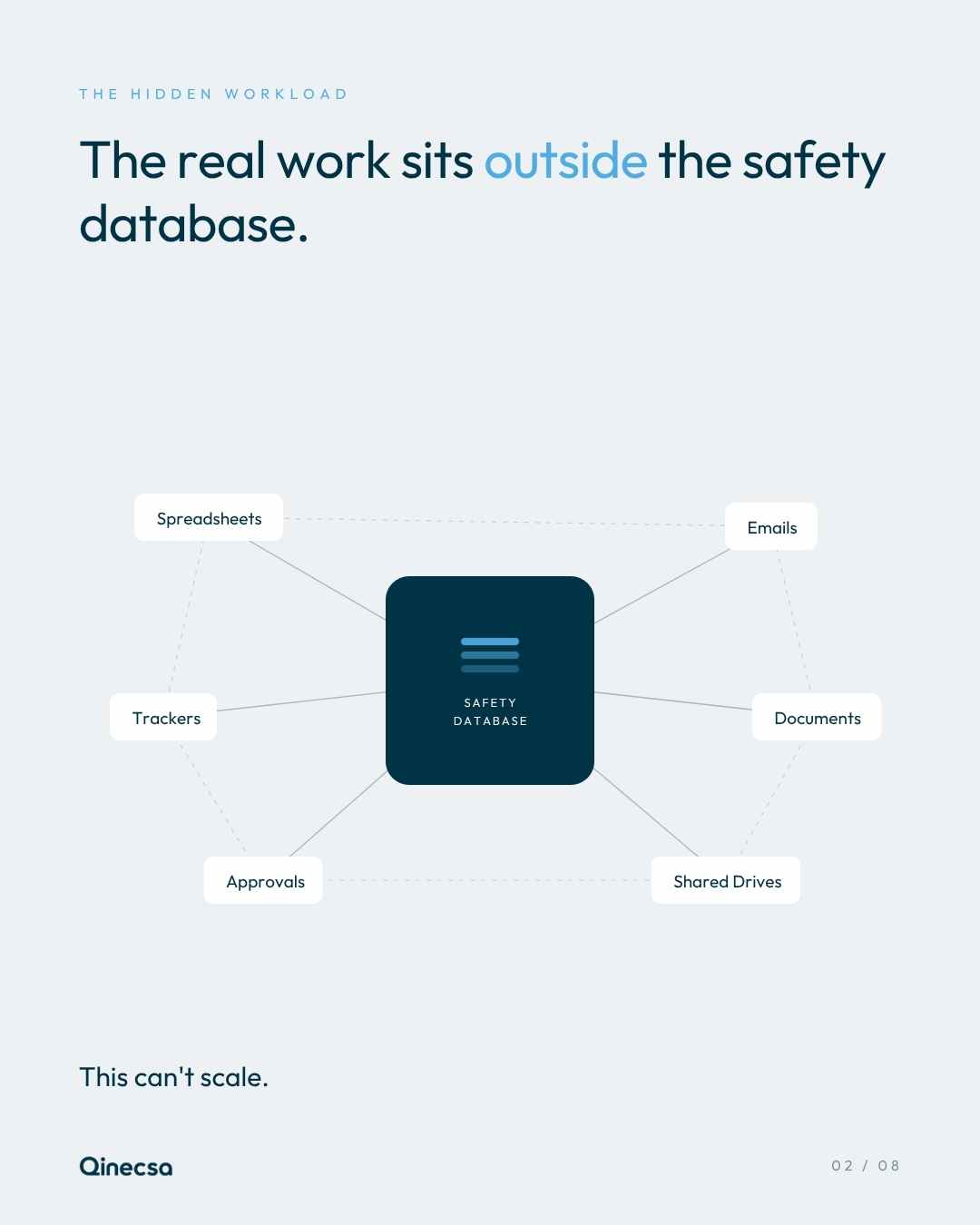
However, the greatest operational inefficiencies rarely exist inside the database itself.
Instead, they occur across the surrounding processes:
- Periodic report planning and coordination
- PSMF management
- Local safety activities
- Vendor governance and oversight
- PV Agreements Management
- Regulatory tracking
- Medical term query management
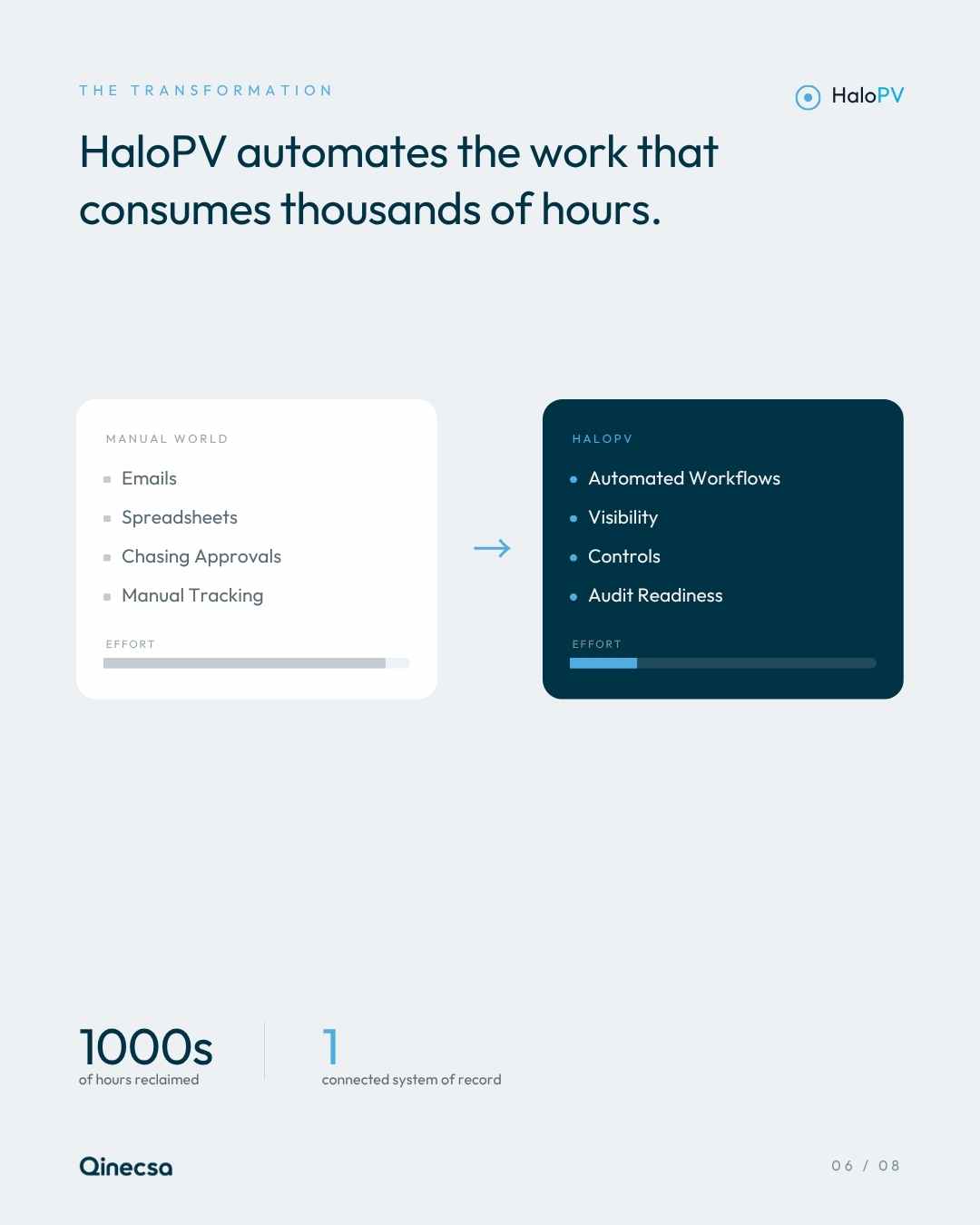
These processes are often managed using spreadsheets, emails, shared drives and disconnected applications, creating unnecessary manual effort, reducing visibility and increasing compliance risk.
As organisations grow globally, these inefficiencies become increasingly difficult to manage.
Why The Pharmacovigilance Automation Market Is Growing
The rapid expansion of the automation market reflects a wider shift in how life sciences organisations approach pharmacovigilance.
Rather than simply processing more cases with more people, leading organisations are redesigning operational workflows to become more intelligent, automated and scalable.
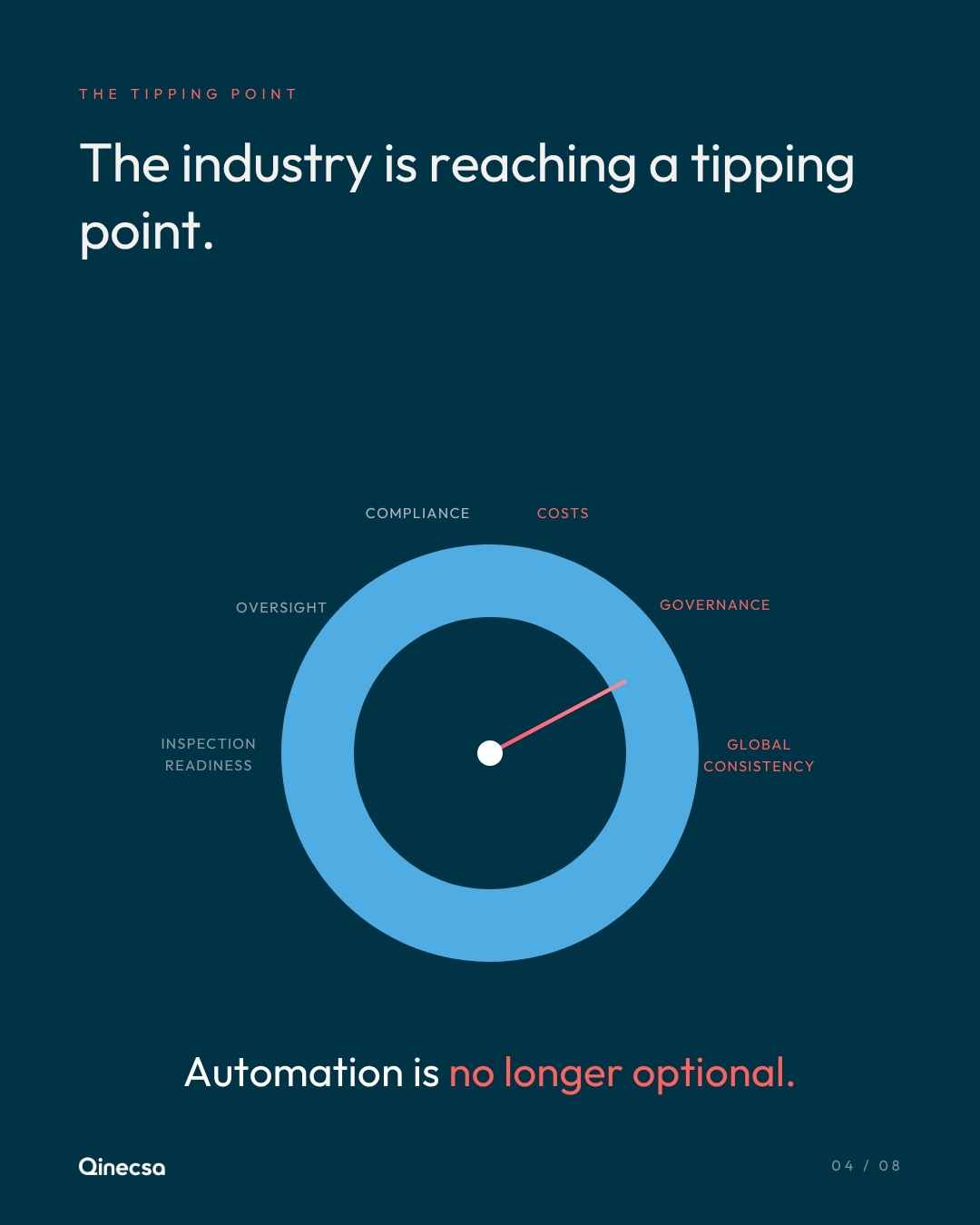
Key drivers include:
- Increasing adverse event volumes
- Greater regulatory scrutiny
- Pressure to improve inspection readiness
- Global operating models requiring greater consistency
- Rising operational costs
- Increased adoption of AI-enabled technologies
- Demand for higher quality, more traceable data throughout the PV lifecycle.
Automation is becoming a strategic capability – not simply a technology investment.
Introducing HaloPV
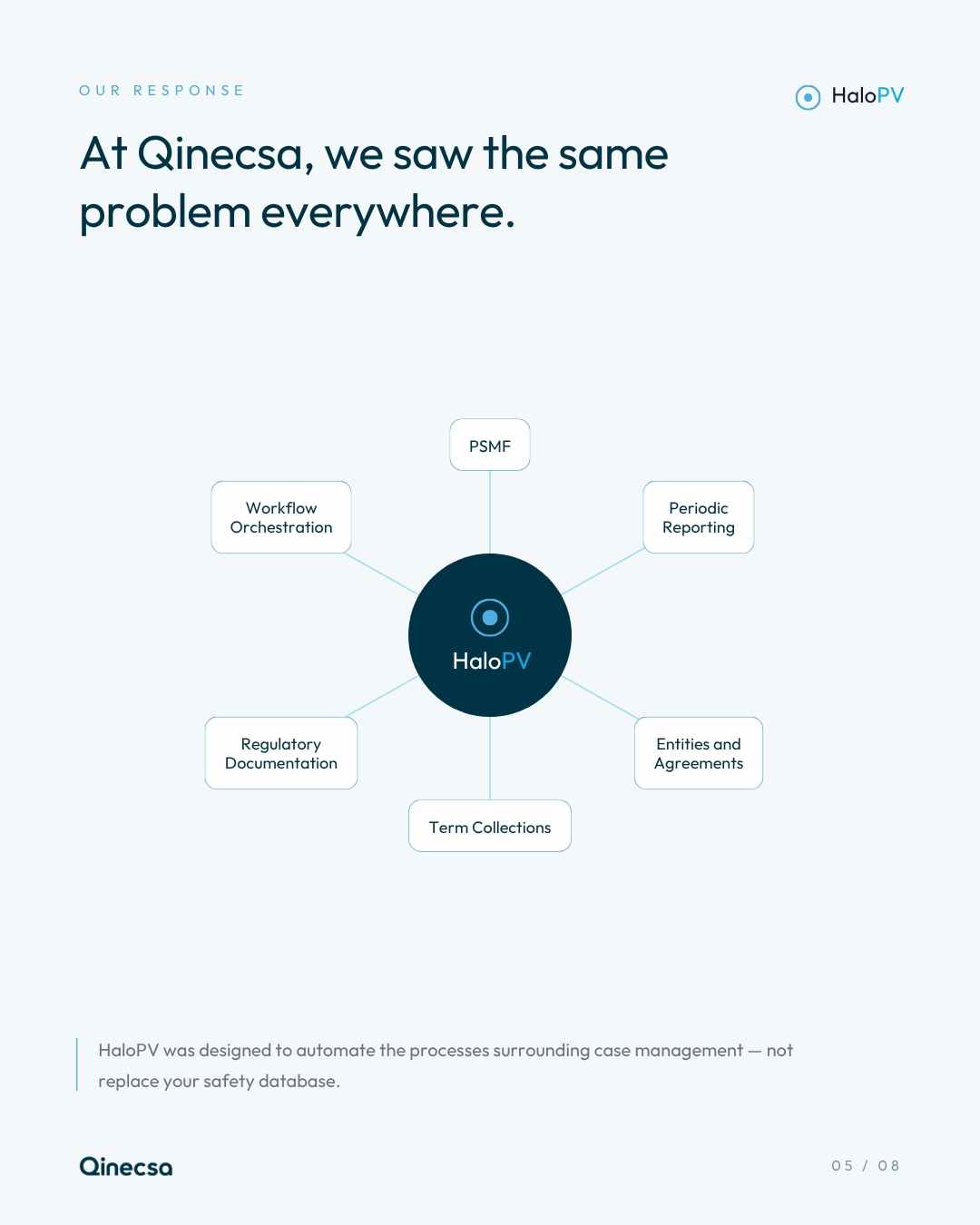
HaloPV is Qinecsa’s best-in-breed pharmacovigilance platform, specifically built to automate the workflows that traditional safety databases cannot handle.
Unlike platforms that require wholesale replacement of existing infrastructure, HaloPV integrates with your existing PV ecosystem. Organisations can deploy the platform as a complete end-to-end pharmacovigilance solution or introduce individual modules to solve specific operational challenges before expanding over time.
This flexible, modular approach enables organisations to modernise at their own pace while protecting previous technology investments.
Automating The Work That Creates The Greatest Operational Burden
HaloPV focuses on the repetitive, process-driven activities that consume valuable pharmacovigilance resources every day.
Examples include:
- Pharmacovigilance System Master File (PSMF) management
- Periodic report scheduling, coordination and oversight
- Local safety ICSR management and its reconciliation with global safety database
- Vendor qualification, agreement management and governance
- Managing MedDRA dictionary upgrade
- Regulatory documentation management and communication tracking
- Tracking local and global risk minimisation measures
By automating these workflows, organisations can reduce manual effort, standardise global processes and improve operational control without disrupting existing safety systems.
Technology Built Specifically For Pharmacovigilance
Unlike generic workflow automation platforms, HaloPV has been purpose-built for pharmacovigilance.
Every module has been designed around the operational realities of PV teams, incorporating regulatory requirements, governance controls and industry best practices from the outset.
This enables organisations to improve consistency, strengthen inspection readiness and deliver better compliance without creating additional complexity.
Benefits Beyond Efficiency
While automation delivers measurable productivity improvements, the wider organisational benefits are even more significant.
HaloPV helps organisations:
- Reduce manual and repetitive activities
- Improve global and local PV process consistency
- Strengthen governance and auditability
- Increase operational visibility
- Accelerate workflow completion
- Support inspection readiness
- Improve collaboration across global and cross functional teams
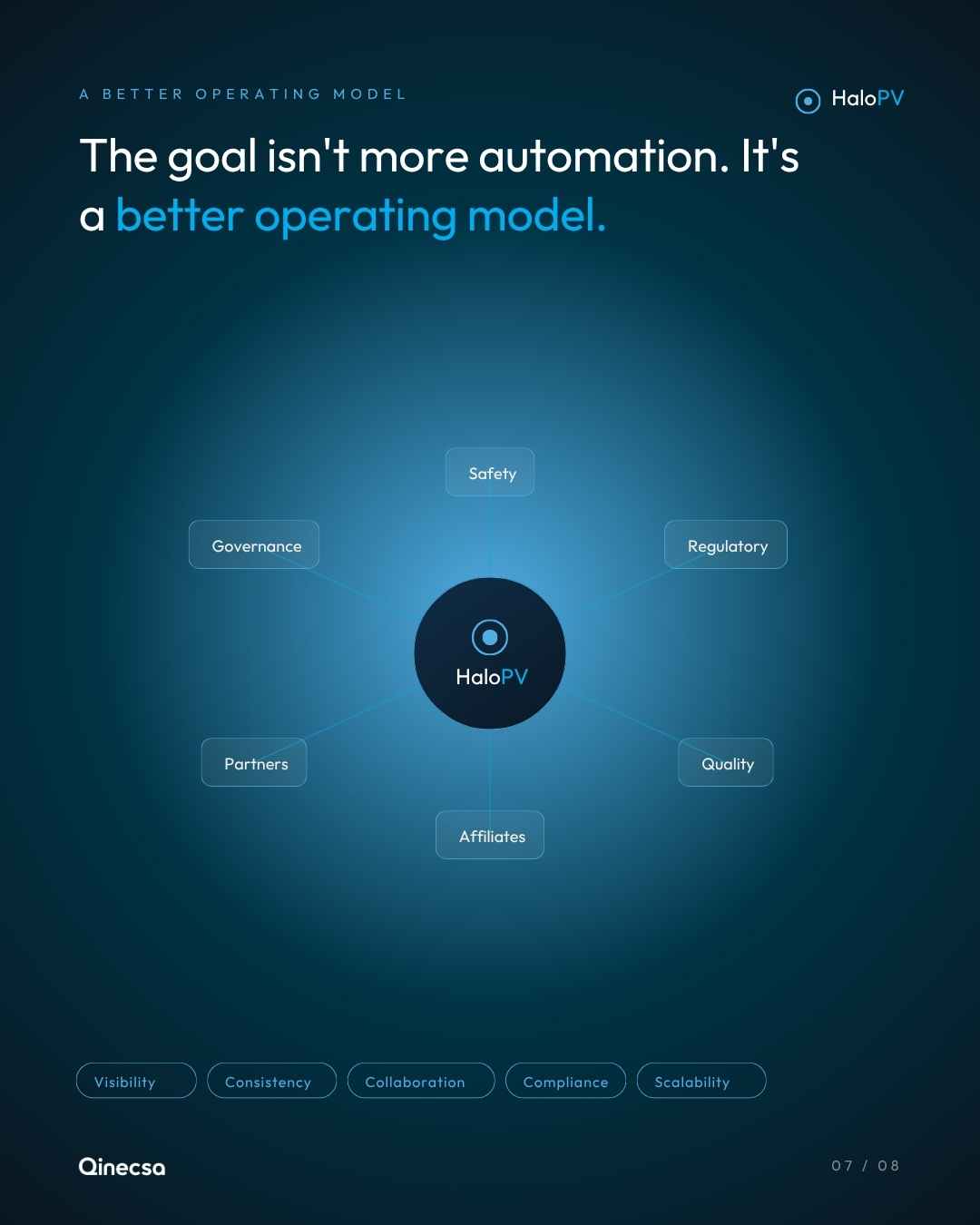
- Create a scalable operating model capable of supporting portfolio growth
Ultimately, this allows pharmacovigilance professionals to spend less time managing administrative processes and more time focusing on scientific review, benefit-risk evaluation and protecting patient safety.
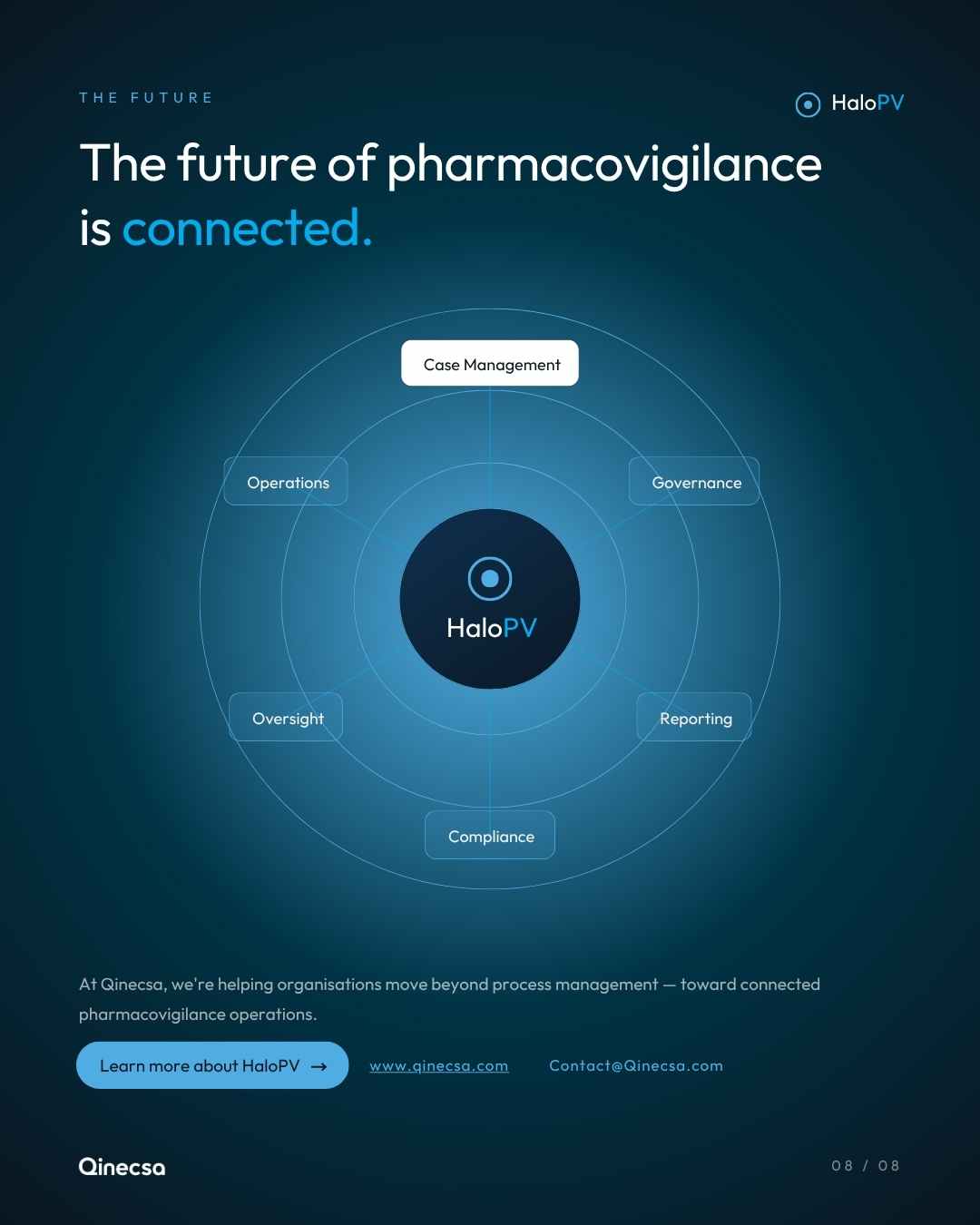
The Future Of Pharmacovigilance Is Connected
The next generation of pharmacovigilance will not be defined solely by faster case processing.
Success will come from creating connected, intelligent operating models where automation supports every stage of the pharmacovigilance lifecycle–from governance and reporting through to regulatory oversight and operational management.
HaloPV has been designed for exactly this future.
Its modular architecture, low-disruption deployment model and proven expansion path allow organisations to modernise gradually while delivering immediate operational improvements.
Ready To Modernise Your PV Workflows?
If your organisation is looking to automate the pharmacovigilance workflows your safety database cannot handle, HaloPV provides a flexible, scalable solution that integrates with your existing ecosystem while strengthening compliance, efficiency and operational control.
Download the eGuide to learn how automation can help safety teams reduce coordination effort, improve oversight and stay audit-ready. Or speak to the Qinecsa team to arrange a demo.
Ref: https://sg.finance.yahoo.com/news/pharmacovigilance-automation-market-size-reach-083000917.html